Irakli Samelia
Tbilisi, Georgia
Organic Hard-Surface & Product Exploration
Project Overview
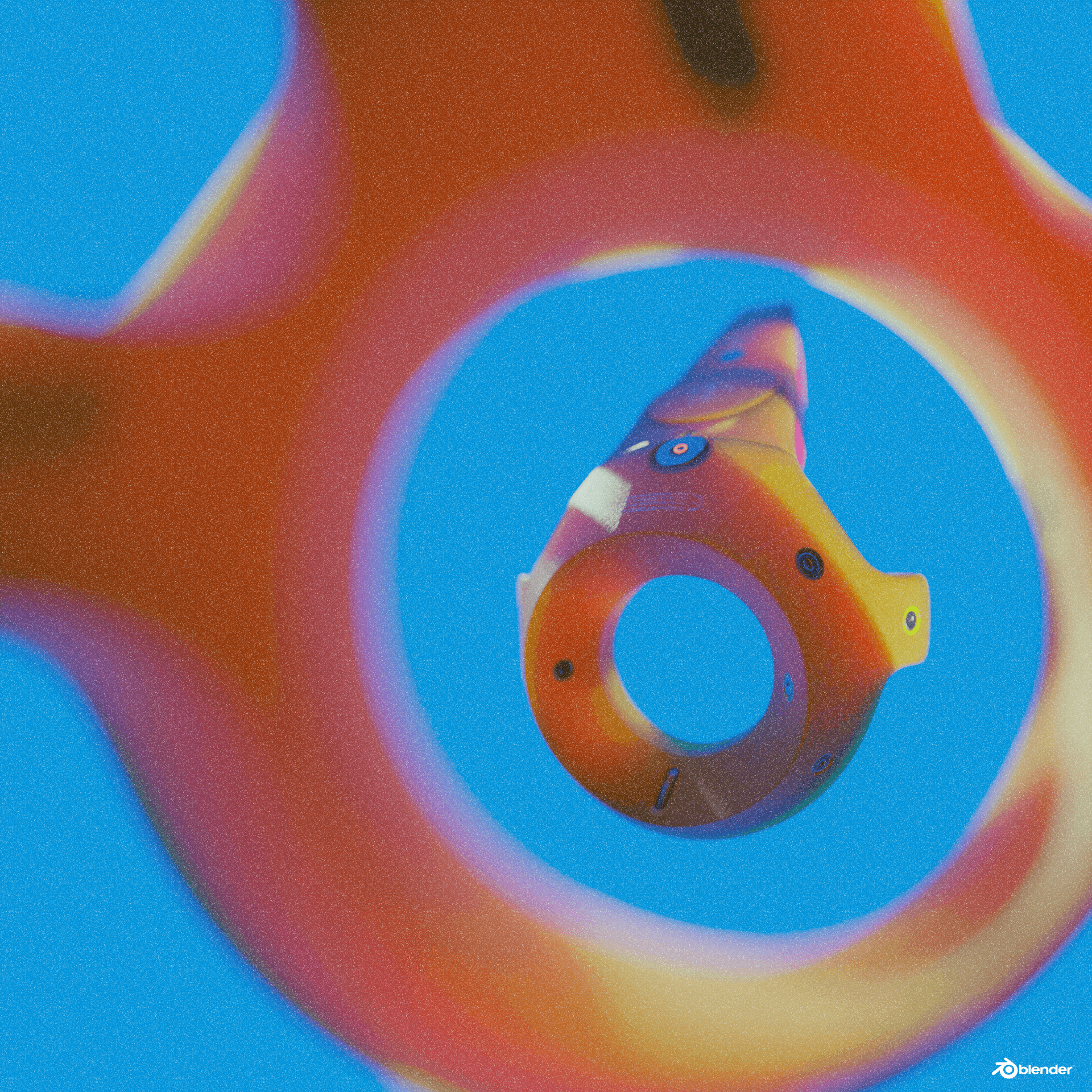
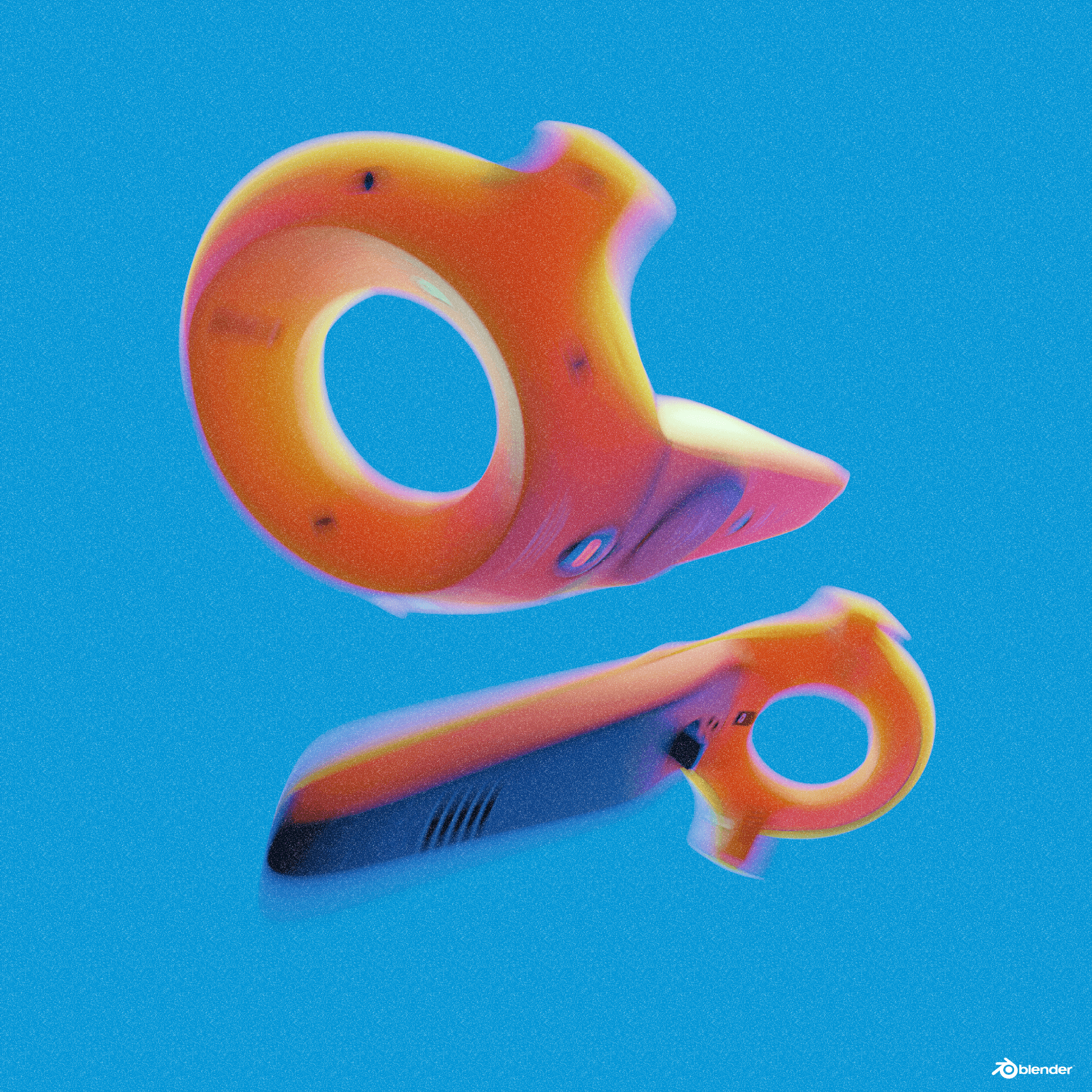
This project is an advanced 3D visual exploration focusing on the intersection of industrial gorpcore aesthetics and fluid, organic hard-surface modeling. The study centers around a modular technical component, utilizing a high-contrast palette of safety orange, tactical yellow, and vibrant cyan. The goal was to master macro product framing and create seamless, detailed close-ups that emphasize material density, mechanical fastenings, and functional industrial ergonomics.
Technical Breakdown & Workflow
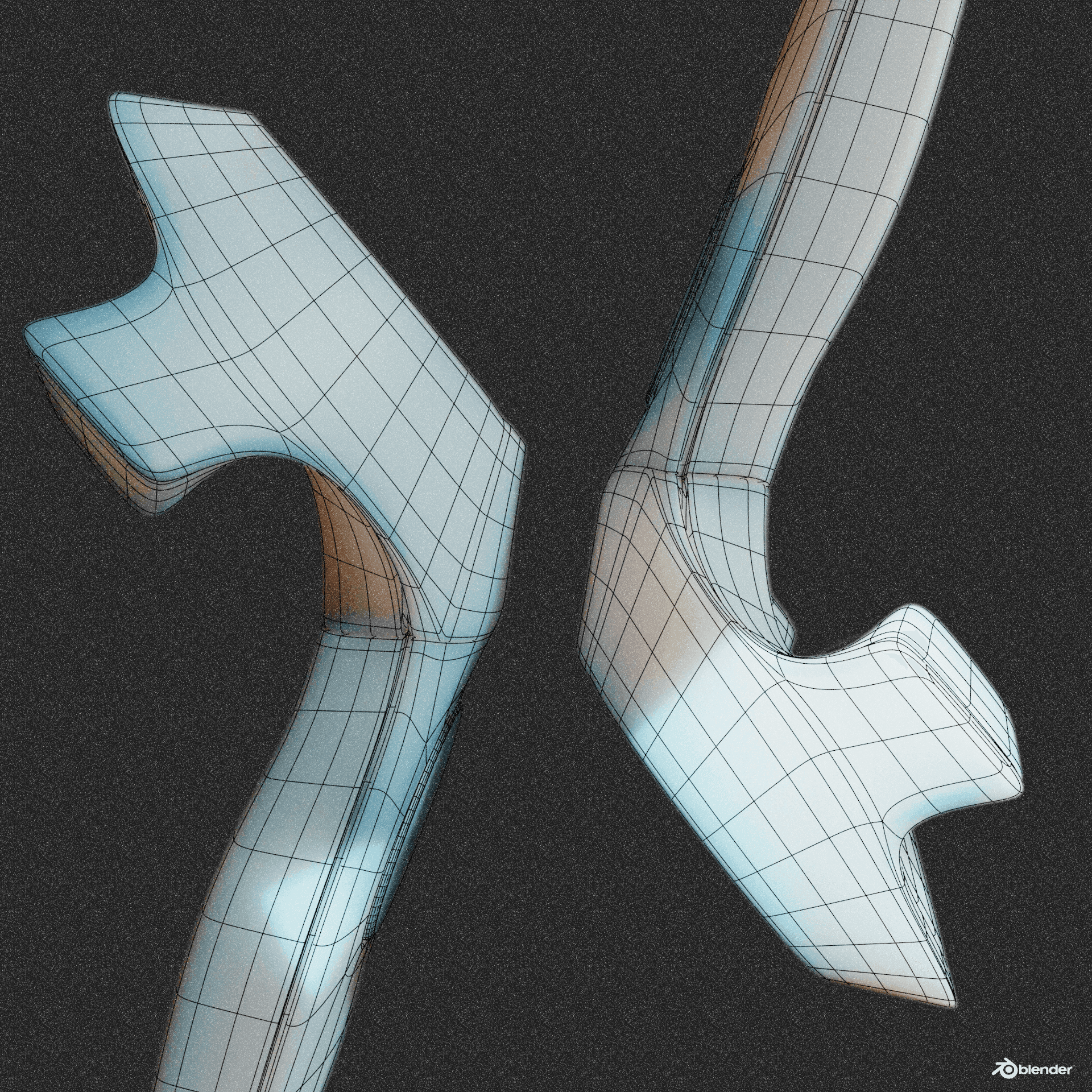
Advanced Subdivision Surface Modeling The primary geometric challenge was maintaining perfectly smooth, curved surfaces while cutting complex mechanical holes and slots into the mesh. I utilized careful edge-loop routing and strict quad-only topology to avoid any pinching or shading artifacts under high-subdivision renders.
Material Layering & Color Theory
To achieve the striking industrial look, I engineered a multi-layered shader involving a semi-matte, high-visibility orange base with a micro-roughness map to mimic premium molded composite plastics. Subtle Subsurface Scattering was added to give the edges a slightly translucent, high-end technical feel under strong light, alongside procedural edge wear and subtle manufacturing stamps to ground the abstract forms in reality.
Challenges & Solutions
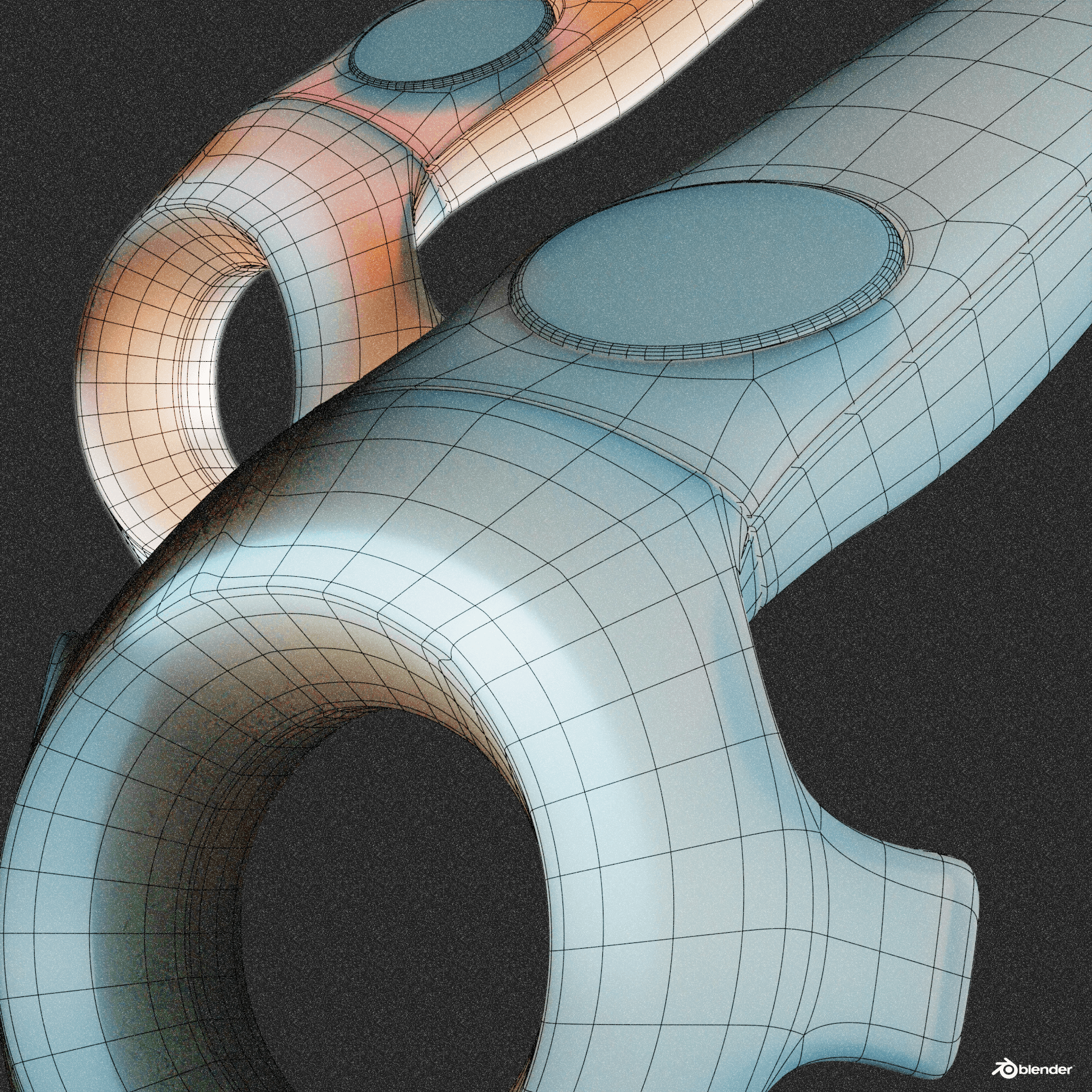
The Challenge: When working with highly organic hard-surface shapes, maintaining consistent curvature across complex intersections often causes surface pinching. This becomes extremely noticeable under glossy studio lighting reflections, breaking the realism of the product render.

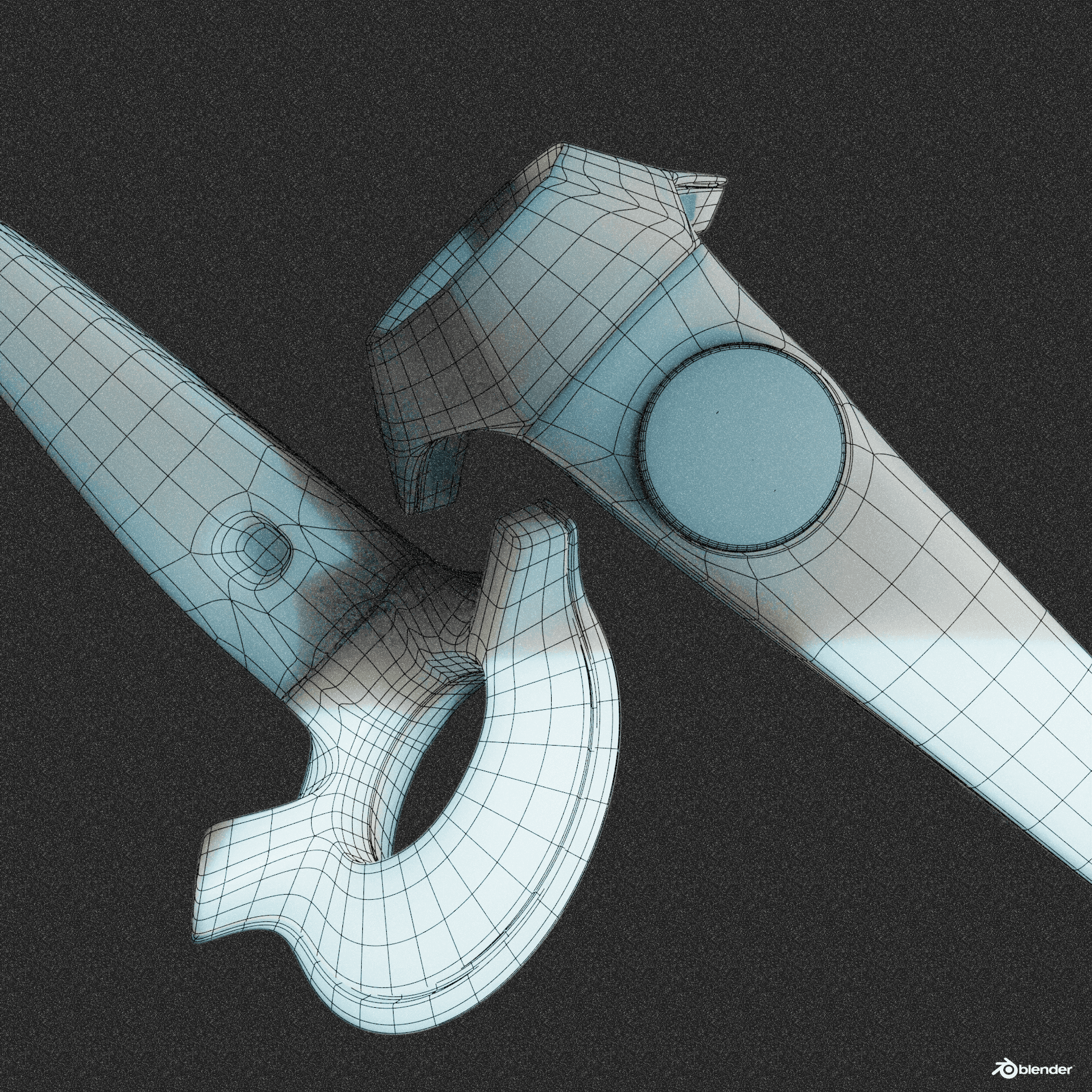
The Solution: Instead of relying purely on heavy boolean operations, I utilized a guide mesh workflow. I created a clean, high-density base curvature shape first, then used the Shrinkwrap modifier locked to vertex groups to project the modified technical panels perfectly onto the flawless underlying curve. This completely eliminated shading distortions and guaranteed perfect reflections along the specular edges.
Material Layering & Color Theory
To achieve the striking industrial look, I engineered a multi-layered shader involving a semi-matte, high-visibility orange base with a micro-roughness map to mimic premium molded composite plastics. Subtle Subsurface Scattering was added to give the edges a slightly translucent, high-end technical feel under strong light, alongside procedural edge wear and subtle manufacturing stamps to ground the abstract forms in reality.
Process Gallery (Blender Viewport)
Figure 2.0: High-density quad-mesh structure highlighting clean topology and edge flow. Figure 2.1: Shading inspection showcasing the seamless transition between mechanical cutouts and curved surfaces.